- Home
- Buying a Piano
Buying a Piano in Singapore
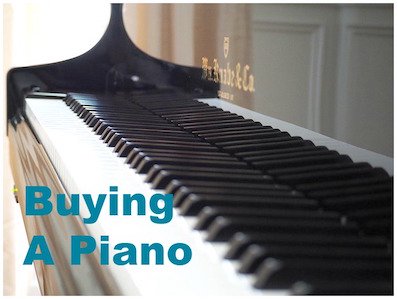
Buying a piano is important for every piano student. Being able to practise on a decent or good practice piano is essential.
While some students choose to start on electronic keyboards, it is best to switch to a piano within a year, six months if possible. I recommend all students learning at my studio to use an acoustic piano from the start and to rent one first if unsure.
It is good to buy a piano appropriate for the level of learning of the student to facilitate the development of good piano technique and listening skills.
A good piano would help a committed student and a poor piano could limit him.
Listening and Piano Technique
The piano you buy will have a long-term impact on learning. The sound or tone quality of the piano should facilitate learning listening skills.
It should also be responsive and able to produce a wide range of sound qualities when played differently. Poor quality instruments often look good on the outside but are unresponsive and limit learning.
When taught to listen well on a responsive well-made piano, the student will be able to develop a sensitive touch and ear for music!
If you'd like some piano recommendations, just fill in this form here.
Buying a piano suitable to the learning level
A piano is a costly investment and buying the best piano for your budget is always sound advice.
1. Beginners
As students are focused on gaining basic skills, a decent piano of a reputable make is recommended. This could be a lower model of a good make or an older piano (best if ten years old or less) of a good make which could be at a substantial discount.
If using an electric piano or keyboard to learn classical piano, it is best to upgrade to a real piano within half a year to one year.
Make sure keys are not too heavy or stiff so that the fingers can maintain good shape while developing strength.
2. Mid-grade students
As basic piano playing skills should have been established, the tonal vocabulary of the student is being widened, along with building more refined technical skills.
A lower model may have limited tonal sensitivity and responsiveness so it may be time to upgrade to a more advanced piano model.
3. Higher-grade students
At higher grades, there is a great emphasis on tonal sensitivity and refinement in piano playing. Hence, a higher model may be recommended.
4. Diploma students
Where possible, use a top range upright or a grand piano to develop refined listening and technical skills.
Grand pianos often have slightly heavier keys that would help develop finger strength.
What makes a high quality piano?Which Piano Makers to Consider?
The piano is very complicated! Rightfully, countries that have a long history of making instruments of excellent quality boast the most highly-prized instruments.
European countries known for their fine quality include Germany, Austria and France. Eastern European countries like the Czech Republic make very good instruments as well. European makes are usually responsive to touch with a rich, full sound.
Good Asian makes are usually from Japan or Korea. In the initial years, these instruments had a thinner tone that lacked character and expressive tonal control. However, since then, with much improved production quality and research, good Japanese and Korean instruments have gained the trust of many musicians worldwide.
In recent years, China has made an increasing number of pianos. Some of these brands have improved considerably and this has been recognised by technicians and professionals internationally.
Beware!
A poorly-made instrument may have difficulty keeping its tuning stable and have limited tonal qualities. As piano quality improves and consumers are better informed, this type of piano hopefully becomes increasingly rare.
When I started teaching music, I was quite concerned that some serious music students unknowingly bought overpriced instruments of poor quality.
These brands often have stiff keyboards, muffled tone or deteriorate very quickly. Brand names that simply appear as "XXX-Poland" for example, may not be made in Poland at all. Also, a German-sounding brand may really be made in China. That's tricky, isn't it?!
If you are thinking of buying a piano of a relatively unknown brand, it really pays off to do your research. Buying the right piano is a worthwhile investment.
Click here for some piano makers you may consider.
Professional piano technicians in the USA have done extensive assessments on the available pianos in the market today. To read more about their findings, here's a book that I recommend, Acoustic and Digital Piano Buyer by Larry Fine.
Help on Choosing Secondhand Pianos
If you would like me to suggest a piano that may be good for you, simply fill in the form below and click on Send it!


